There was a time when preparing a house for bad weather meant bringing in the porch cushions, cleaning out the rain gutters once every autumn, and keeping a flash drive full of family photos near the front door. Today, homeownership feels noticeably different. Across the globe, intense heatwaves, sudden cloudbursts, unseasonal winter freezes, and sustained high winds are no longer rare anomalies. They are becoming the defining environmental conditions of our lifetime.
For eco-conscious homeowners, this shift requires a subtle evolution in how we think about green renovation. Sustainable living is no longer just about reducing your carbon footprint or lowering month-to-month energy consumption; it is equally about resilience. A home that suffers severe water damage, loses power during a three-day heatwave, or structural failure during a windstorm creates massive material waste and financial strain.
Upgrading your home for extreme climate resilience means building a fortress that works in harmony with its natural surroundings. It involves evaluating how water flows across your property, how thermal energy moves through your walls, and how your outdoor structures withstand high winds. By taking a proactive, comprehensive approach to retrofitting, you can protect your investment, maintain indoor safety during emergencies, and dramatically improve your daily living comfort.
Fortifying the Building Envelope to Stand Firm Against Storms and Temperature Spikes
Consider what happens to the outer shell of your house during a severe storm. Rain does not simply fall vertically; high-velocity winds drive it horizontally into tiny hairline fractures in your siding, soffits, and rooflines. At the same time, solar radiation bakes exposed surfaces during intense summer months, causing materials to expand and contract rapidly. Protecting your home begins with securing this primary barrier.
Your roof is the first line of defense against both torrential rains and punishing heat. When evaluating your overhead protection, traditional asphalt shingles often fall short under changing climate conditions. Upgrading to high-wind impact-rated metal roofs or specialized composite materials offers superior durability against hail and severe gusts. Furthermore, choosing lighter shades or reflective cool-roof coatings actively bounces thermal radiation away from your attic spaces, drastically reducing solar heat gain. When roof replacement or repair becomes necessary, hiring professional roofing services ensures that critical underlayments, flashing, and ridge vents are properly integrated to prevent water backup under wind-driven rain.
Moving from the top of the house down to the ground, hardscape surfaces around your property require equal attention. Driveways, pathways, and concrete patios endure tremendous stress during extreme weather. Water enters porous concrete or asphalt, and when sudden sub-zero freezes hit, that trapped moisture expands, causing spalling, deep cracks, and structural shifting. Applying a heavy-duty driveway sealing treatment creates an impenetrable hydrophobic barrier. This simple exterior step prevents moisture infiltration, resists chemical breakdown from freeze-thaw cycles, and extends the lifespan of your paved surfaces without requiring resource-intensive tear-outs and replacements down the road.
Beyond protective coatings, consider how thermal bridging occurs across doors, windows, and wall assemblies. Replacing single-pane or outdated double-pane glazing with triple-glazed, argon-insulated windows acts as an acoustic and thermal buffer. Adding continuous exterior rigid foam insulation beneath new fiber-cement siding creates a seamless thermal blanket around the house frame. This prevents wind-driven thermal loss in sub-zero freezes while stopping intense heat from penetrating inward during summer extremes.
Paying attention to air barrier continuity around wall penetrations and overhangs further completes the envelope defense. Micro-gaps around light fixtures, exhaust vents, and hose bibs act as entry paths for driving rain and embers during wildfire threats. Using high-grade elastomeric sealants ensures these weak points flex with temperature shifts while remaining permanently airtight.
Managing Heavy Stormwater Runoff and Diverting Water Away From Your Foundation
Picture a sudden summer downpour where two inches of rain fall in less than an hour. As municipal storm drains overflow, thousands of gallons of water cascade off your roof and flood onto the surrounding soil. Without deliberate drainage planning, that water pooling around your foundation exerts hydrostatic pressure against subterranean walls, eventually finding its way into basements or crawlspaces.
Assessing Property Topography
Walk around your yard during a rainstorm to map where water naturally pools and flows. Look for low spots near foundation walls or saturated soil around downspouts. Notice how neighboring lots shedding water might overload your property during severe weather events.
Restructuring Ground Contours
To prevent water from migrating toward your home’s structural footings, slope the surrounding soil away from the foundation at a minimum grade of six inches over the first ten feet. When major re-grading or deep trenching for French drains is required, working with experienced excavation contractors ensures the land is sculpted safely without disrupting existing underground utilities or tree root systems.
Installing Sub-Surface Water Capture
Excavate targeted swales filled with gravel and perforated piping to intercept surface runoff before it reaches your home, redirecting the volume toward rain gardens or dry wells. Rain gardens planted with deep-rooted native perennials not only filter urban runoff but also allow groundwater aquifers to recharge naturally.
Safeguarding Internal Drain Lines
Ensure your basement or lower-level plumbing systems can handle backpressure from overloaded municipal sewers during sudden rainstorms. Having an experienced plumber install sewer backflow valves and high-capacity sump pumps with battery backups guarantees that rising municipal groundwater will not back up through your floor drains or fixtures. Adding dual-sump redundancy ensures complete peace of mind during multi-day atmospheric river events.
Constructing Wind-Resistant Landscapes and Sustainable Outdoor Living Spaces
When a homeowner considers extreme weather, they often focus entirely on the main house structure, neglecting the surrounding landscape. Yet outdoor fixtures, shade structures, and boundary lines are frequently the first elements to fail during gale-force winds or severe weather events, creating dangerous flying debris that can damage primary living spaces.
Think of your yard not as an isolated garden, but as a protective buffer zone. Standard wooden fences often act like solid sails in high winds; when gusts exceed fifty miles per hour, posts snap and panels tear away. Partnering with a skilled fence contractor allows you to design perimeter boundaries built for high airflow. Utilizing open-slatted designs, reinforced steel posts, or sustainably harvested composite materials creates a durable barrier that diffuses wind pressure rather than resisting it head-on.
Similarly, outdoor shade structures play a vital role in passive cooling and protecting exterior walls from direct solar radiation. However, lightweight store-bought shade sails or flimsy wooden trellises rarely survive severe weather. By hiring specialized pergola contractors, you can construct heavy-timber or aluminum overhead structures securely anchored into concrete footings. Modern eco-friendly structures can feature adjustable louvered roofs that open during high winds to relieve pressure, close during downpours to capture rainwater, or support integrated solar panel arrays that provide off-grid power to your home.
The sequence of exterior defense works in tandem across your property:
- Solar and Shade Pergola: Provides passive cooling and captures solar energy on upper outdoor levels.
- Airflow-Permeable Fencing: Diffuses high-wind pressure around the yard boundary.
- Permeable and Sealed Hardscape: Manages surface runoff and reduces localized heat absorption.
- Drainage and Foundation Gradient: Channels accumulated stormwater safely away from structural walls.
Strategic native landscaping further augments this structural defense. Planting deciduous trees on the southern and western exposures provides thick leafy canopies that shade roofs and walls throughout scorching summers, dropping cooling ambient temperatures by several degrees. Come winter, those same trees shed leaves, allowing low winter sun rays to naturally warm home interiors.
Evaluating plant placement near structures also protects against wind damage and fire hazards. Removing dead limbs, thinning heavy tree canopies, and establishing defensible non-combustible gravel zones directly adjacent to exterior walls keeps falling branches from breaching roofs or ignition sources from catching during dry spells.
Hardening Mechanical Systems and Securing Uninterrupted Household Power
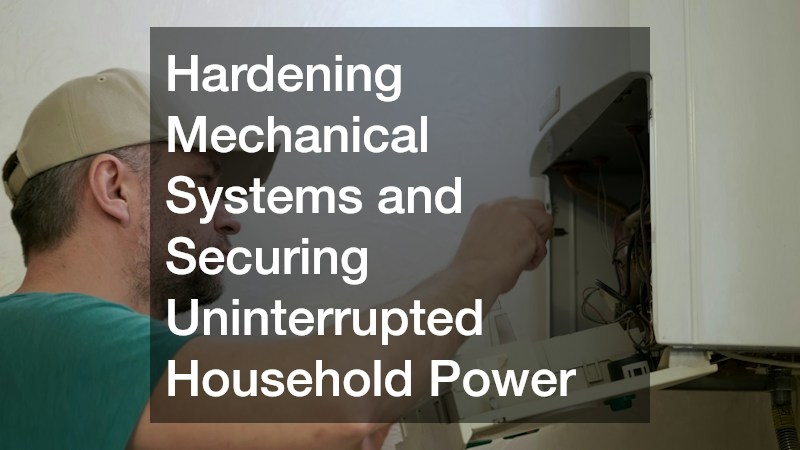
Imagine a severe winter ice storm or an August heatwave causing a region-wide electrical grid failure. As outside temperatures reach extremes, an unpowered home quickly becomes uninhabitable. Food spoils, pipes freeze or interior temperatures spike to dangerous levels, and essential health devices lose function. Resilience requires making your internal mechanical and electrical infrastructure robust, flexible, and efficient.
- Schedule Comprehensive Climate-Stress Testing: Before seasonal extremes arrive, your heating and air distribution equipment should be thoroughly evaluated under heavy load conditions. Promptly arranging for professional HVAC repair ensures your heat pumps, ductwork, and ventilation systems operate at peak energy efficiency, preventing unexpected equipment failure when you need thermal control the most.
- Optimize Ductwork Integrity: Unsealed, leaky ducts can waste up to thirty percent of conditioned air in unconditioned spaces like attics or crawlspaces. Sealing these connections with mastic sealant keeps your indoor climate stable without overworking mechanical components.
- Integrate Hybrid Off-Grid Power: Relying solely on the public energy grid during extreme weather events is a major vulnerability. Collaborating with a licensed electrical contractor allows you to safely install transfer switches, smart circuit panels, and battery storage banks connected to rooftop solar systems. This ensures your critical circuits—such as refrigeration, well pumps, medical equipment, and climate controls—remain operational during extended blackouts.
- Install Surge Protection: Extreme storms frequently trigger power surges that can fry sensitive electronics, heat pump invertors, and smart home systems. Whole-home surge protectors installed at your main breaker panel offer essential protection against lightning strikes and power grid fluctuations.
- Incorporate Smart Environmental Sensors: Installing connected sensors throughout utility spaces offers early warnings for rapid humidity spikes, extreme temperature drops near plumbing lines, or early pipe leaks. Automated shut-off valves tied to these sensor arrays instantly cut main water supply feeds if a line bursts during an unexpected freeze, limiting water damage while residents are away.
Upgrading Interior Finishes and Building Materials for Thermal Mass and Longevity
Step inside a traditional house during a summer heatwave, and you will immediately notice how standard drywall, carpet, and synthetic flooring materials hold onto ambient heat and degrade quickly when exposed to moisture. Choosing sustainable, resilient interior finishes helps regulate indoor temperatures passively while offering exceptional durability against unexpected leaks or flooding.
Floor surfaces on ground levels and basements are particularly vulnerable to climate disruptions. Traditional hardwood and carpets warp, rot, and harbor mold when exposed to standing water or high humidity. Contracting a professional polished concrete contractor to finish slab-on-grade or basement floors creates an elegant, non-toxic, and virtually indestructible surface. Polished concrete acts as a brilliant thermal mass: it absorbs ambient heat during sunny winter days and releases it slowly at night, while remaining cool underfoot during summer months. In the event of localized flooding, it can be wiped clean without needing costly tear-outs or generating landfill waste.
Beyond flooring, comprehensive interior retrofits must address overall building tightness and wall assembly performance. Working with trusted remodeling services enables you to strip back outdated insulation, seal structural air leaks, and install continuous exterior insulation wraps or non-toxic dense-pack cellulose. Upgrading window frames to insulated composite units with low-emissivity glass further reduces thermal bridging. These holistic interior enhancements create a tight building envelope, ensuring that your living space maintains stable interior temperatures with minimal energy input, even when weather conditions outside are at their worst.
To complete the interior sanctuary, air quality systems deserve critical upgrades. During wildfire smoke events or high-pollen seasons triggered by warmer springs, indoor spaces can become heavily polluted. Integrating mechanical ventilation with heat recovery along with medical-grade inline filters ensures fresh, tempered air constantly circulates while sealing out hazardous particulate matter and smoke plumes.
Thoughtfully choosing interior wall products adds another layer of security against moisture spikes. Utilizing magnesium oxide boards or water-resistant gypsum assemblies in basements and wet zones ensures that high humidity or short-term dampness does not lead to structural decay or hazardous mold blooms.
Taking Action Today for a Safe and Energy-Efficient Tomorrow
Transforming a traditional residence into a climate-resilient home is not an effort that happens overnight. It is a deliberate, methodical journey that balances immediate emergency readiness with long-term ecological responsibility. By systematically assessing your property from the roof structure down to the subterranean drainage, you establish layers of defense that guard against high winds, severe thermal shifts, and heavy rainfall.
Taking early, proactive steps prevents catastrophic damage, saves thousands of dollars in emergency repairs, and dramatically lowers your home’s operational carbon footprint. Whether you begin by upgrading your drainage pathways, fortifying your mechanical systems against grid instability, or enhancing your building envelope with high-performance insulation, every improvement contributes to a safer, more sustainable footprint.
The future of housing lies at the intersection of sustainability and durability. By making smart, forward-thinking choices today, you ensure that your living space remains a comfortable, efficient, and secure sanctuary for decades to come, no matter what weather lies on the horizon.